
Spotight Series
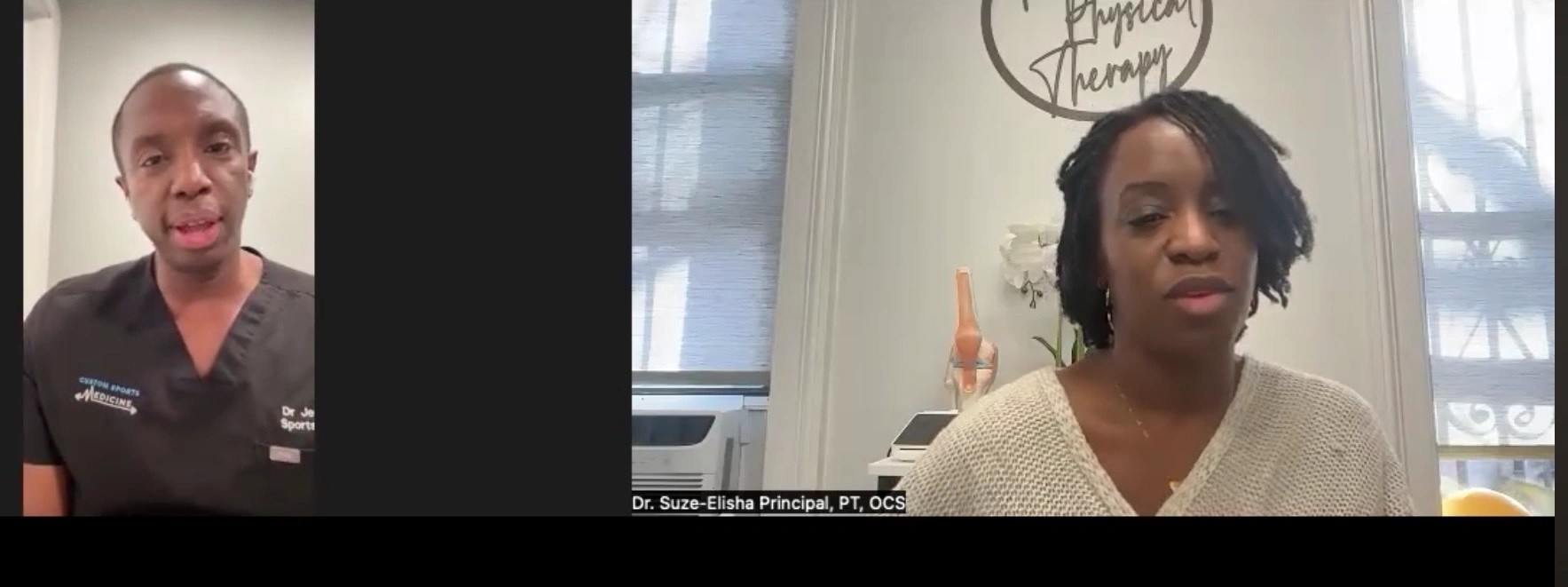
Interview with Dr. Patrick Jean-Pierre
Spotlight Series topic:
Dr Patrick Jean-Pierre and Atlantic Orthopedics work as a physician at Atlantic Orthopedics and Sports Medicine. My personal brand name is Custom Sports Medicine
Guest Name:
Dr. Patrick Jean-Pierre
Guest Credentials:
Board Certified Internal Medicine and Non Operative Sports Medicine doctor
Discussion Details:
We talk about:
- The mindset behind becoming a founder in healthcare
- What patients (and even clinicians) misunderstand about recovery
- The role of physical therapy in long-term outcomes
- Representation, responsibility, and legacy in medicine 🇭🇹
- The future of collaboration in healthcare
Benefit of Watching:
What You’ll Gain:
- Real insight into sports medicine + recovery
- Founder-level mindset in healthcare
- A powerful story of identity and purpose
- Lessons on leadership, growth, and impact
Address of guest’s business:
489 Atlantic Ave, Brooklyn, NY 11217
Dr. Patrick Jean-Pierre: Of course.
Suze-Elisha Principal PT: Awesome. All right. So tell me a little bit about your journey. What’s your origin story into sports medicine?
Dr. Patrick Jean-Pierre: So my background story is um I grew up playing sports. U I’m an athlete. I love soccer. We both are Haitian. So we grew up with a background in sports. Me especially I’m the youngest of four. And so I have three older brothers that love soccer and I love soccer. And as I was growing older and I thought I was going to be a professional soccer player, unfortunately I realized my dreams were not going to get there. And with that being said, um both my parents are physicians. And so literally I was like plan B, let’s be a doctor. Um and so I didn’t know exactly what I wanted to do, but I knew it was probably going to be something sports related. Um my whole life I was like, “Oh, I want to be the Knicks team doctor. I want to be orthopedic surgeon.” Uh when I got into medical school, unfortunately, I injured my back um in medical school. And between that and realizing surgery’s not it kind of didn’t know what I was going to do. I thought I was even going to do anesthesia. Um but through luck and circumstances I ended ended up doing internal medicine and while I was in my training in internal medicine realized I want to do something sports related. And so it was a random night on night rotation with a good friend of mine who was a dermatology uh our future dermatologist that he’s like man you love sports like why don’t you be a sports medicine doctor. So at the time, this is now 2008 or nine, I started researching into something called primary care sports medicine. And that is where doctors like myself, family practice physicians, pediatricians can be involved in sports medicine. And that’s kind of what took me on my journey to be a um sports medicine and internal medicine doctor.
Suze-Elisha Principal PT: Awesome. So what at what point did you realize I guess it was more than just like a career?
Dr. Patrick Jean-Pierre: Like so again I the I didn’t even know it existed. Um the funniest story I tell about uh me and my experience was I did my training in Northwell or Northshore University Hospital. Now it’s called Northwell Health and at the time like there’s not a lot of people doing it but the fellowship in sports medicine was actually out of that hospital. So there I was the national con conference for sports medicine was actually in Cancun. And so here I am telling the program director in internal medicine like hey you know I got this pre post poster I want to present in Cancun like are you guys gonna like take care of it and pay for it and she goes no I always I remember like it was yesterday she’s like you’re telling me there’s a field of sports medicine that I’ve never heard of and it happens to be the conference for it this year is in Cancun and you want us to pay for it. Um so that’s literally what led me to knowing that it’s a field that again the popularity of the field is still growing. Um we’re becoming obviously with the team doctors for a lot of sports. Um all the professional sports teams, Olympic teams all have what uh including my uh non-operative doctors like myself. So it’s just a field that still continues to grow um in not only experience but in notoriety. And so I kind of got into it then and that’s kind of what got me into the field.
Suze-Elisha Principal PT: Um so the the the question was going to be how your Haitian background um shaped your path to medicine but we see like you said both of your parents were
Dr. Patrick Jean-Pierre: Yeah. physicians. Yeah. And I have a brother. So my mother is an internist as well. My father was an OBGYN and I have a brother who’s also an OBGYN doctor and they actually both work not too far from where my current office is in Brooklyn.
Suze-Elisha Principal PT: So I noticed every year very very well. Oh, that’s funny. Yeah. I got into it. Yeah. My my I think I told you my father and then my mom was um started off in practice as a nurse and then progressed practitioner for for VNS in Queens.
Dr. Patrick Jean-Pierre: Ah okay.
Suze-Elisha Principal PT: So seeing her I was like oh okay. And she kind of was like listen I need you to be able to be in control of yourself. Like I don’t want anybody to be controlled. Right. So she was like she kind of really kind of pushed me to to just look at something different. And then just culturally, right, a lot of us are kind of pushed into medicine.
Dr. Patrick Jean-Pierre: Of course. Of course. I I I have a brother again. I have two brothers, not doctors. Um and it was just I love science. So it was like a natural fit at the age and I like to help people. It’s kind of one of my passions. So that’s kind of how I got into become in medicine.
Suze-Elisha Principal PT: Were there moments where you had to push through doubt or um because of
Dr. Patrick Jean-Pierre: Oh yeah. Okay. Oh yeah. Uh I wouldn’t say doubt. I had um some some things happen in medical school. So uh but I pushed through and I persevered and now we’re here talking today.
Suze-Elisha Principal PT: Here to share one that you feel like even if it’s out there it wouldn’t tarnish.
Dr. Patrick Jean-Pierre: No, there’s not. It’s just certain stuff uh in terms of race could be involved and uh it it limited part of my journey but it’s one of those things where again during those times you know you go through some dark times um but on the end end of it again it all all shapes your experiences in life and shape my experience as a doctor.
Suze-Elisha Principal PT: Correct. Okay. Thanks.
Dr. Patrick Jean-Pierre: Yeah know of course.
Suze-Elisha Principal PT: All right. So clinical insight. So um what are some of the most common injuries you see right now in your practice?
Dr. Patrick Jean-Pierre: So as we know running because we treat quite a lot of runners. Um so running by far is one of the most common things I see. Um by far I would say the probably most common two most common things I see are both knee and lower back pain. Um lower back pain I tell patients because it’s very very frustrating. The lower back pain is one of the top causes for doctor visits in the United States since I’ve been in medical school. That was already a very very long time ago. It’s probably unchanged because I see quite a lot of back pain in my practice now. And then second to that is probably knee pain. So unfortunately as the baby boomers are getting a little bit older, I see quite a bit of knee arthritis. Um the only concerning thing for me is I’m seeing a little bit on some younger patients. So that’s a little bit frustrating, but um knee arthritis is probably the second most common thing I see. And then various sports injuries, neck pain, shoulder pain, and things like that.
Suze-Elisha Principal PT: Have you noticed? So I I did some of my training for the most part it through John Hopkins in Maryland, which is pretty cool. Like across the hall was the orthopedic group. So I could just walk across and replacements back and so on so forth. to your point just and that was in the early 2000s seeing that people were um this was when they were still doing a lot of scopes and cleaning and then at a point they stopped right physical therapy but I mean are you noticing because the younger generation was so is much more active that they’re and maybe have gotten injured during play that they’re now getting more joints replaced.
Dr. Patrick Jean-Pierre: Uh it’s it’s my it’s you’ll love this. My most recent thing that I’m seeing now and I I’m kind of happy because two of the patients have been more recent is there’s being active and inactive. So I’m actually seeing a lot of the arthritis because of inactivity and and over unfortunately some of these patients can have a little bit of being overweight or obese. So you have a combination of inactivity and obesity and that’s contributing to some of the knee arthritis. On the opposite end of the spectrum and I was super proud of this woman. just probably the funniest reaction both good and bad is I had a 60-year-old um like tango dancer who came in with MRIs already sent from her primary care doctor and she’s looking the MRIs I’m talking about she was down she was you would thought I told her unfortunately she had like cancer or something I’m an internist so I’ve had those conversations she was so depressed she’s liked doctor I have to dance you can’t stop me from dancing and she showed me MRIs and she had some meniscus tears but there’s a meniscus tear tears from an acute orthopedic injury and his meniscus tears cuz she’s 61 years old and those are the ones she had. Yeah. The coolest thing about her MRI is it showed no articular cartilage wear and tear. And when you looked at her X-rays also look pristine. So I basically told her I was like look you may be 61 but your X-rays look like they’re 20 and your MRI confirms you have no arthritis. So yeah you have meniscus tears. Like there’s something there. It’s not like it’s nothing but I want you to be active. And so she’s like she I she literally was like I would kiss you right now. And I was just laughing because she was so happy. And the thing I told her and I I just said the number four. And she’s like four? She what does that mean? I go you’re the fourth patient I’ve treated over the last two years over the age of 55 with no knee arthritis. She goes, “Well, doctor, I dance six days a week.” And I go, “Yes, that’s what I try to explain to patients that inactivity is bad. Activity is good and sometimes too much activity can be bad.” And that’s some of the runner rooms that mean you see the younger athletes. But I always tell patients, no, you want to be active. You want to be stronger. The stronger your knee, the better the mechanics, the less likely you’re going to get knee pain.
Suze-Elisha Principal PT: So what do you think? Um like even with this population because we do see those is the less understood about injury and recovery.
Dr. Patrick Jean-Pierre: So it’s I I call it New York syndrome and you trained in Maryland. I did my sports training in Detroit and I did my undergrad. I was at my residency in New York. There is a go go go of New York that sometimes you have to tell the patient and I tell them every day there’s a difference between having some like symptoms of pain which is a discomfort and being injured and sometimes just trying to convince them hey when you’re injured not that you’ll never run but you may have to take a week or two off the running training y so that you can get back to it. Yeah. So quite often that’s probably by far the most uh you like the hardest thing to deal with is like hey look look you got to take a break like I I’m our goal is to get you to running. Yeah. But for literally just a week they’re like I can’t run. And it’s like trying to tell runners like yes you can bike, you can walk, you can elliptical, you just can’t run. So that would probably be the only thing is that in the New York City mentality there’s no there’s no stopping us uh as a New Yorker also that there’s no stopping us. That’ probably be the only hard thing to do deal with all the time.
Suze-Elisha Principal PT: Yeah. I mean I think those that come in to see me and you say, “Hey, listen. You’re going to have to pull back on the mileage and maybe depending on the injury I just cycle.”
Dr. Patrick Jean-Pierre: Yeah. Exactly. I want you to be active. That’s why I always tell patients. It’s like I’m not telling you you need antibiotics. I’m just saying you can’t run. So you can walk, you can still lift weights, you can still Pilates, you can do yoga. Running. Nope. They don’t want to hear that. They want to hear that. They want
Suze-Elisha Principal PT: Yeah. And and some folk it’s like, “Oh my gosh.” You know, we know now with a lot of the research like to those who run and how it helps with their their mental stat, which is awesome. But I’m like, I don’t want you to stop. I want you to keep like I’m the therapist that you’ll find that I can tell you to keep lifting.
Dr. Patrick Jean-Pierre: Yeah. Like you’re the first. I’m like, yeah, but can you pull back on the mileage a bit because you
Suze-Elisha Principal PT: That’s it. Exactly. That’s that that’s another thing too where it’s like, “Oh, when I do like four miles a day, I go, well, we’re going to have to do one until you get you better and then when you get better, you’ll be able to do what you need to do.” And I think it’s also understanding um pulling them into the education and the pain science a little bit. And the more that I incorporate that, I think people have a better understanding. So, just like listen, like symptom from a symptom perspective, like once you’re at a seven, I can’t pull you down. Like already so irritated, it’s irritable. So if I can stay somewhere around a two three and then it calms down within 24 hours. Okay. If it pushes past that and it gets worse and you’re limping, your gait is altered, there’s no range of motion. I’m like, okay, all right, now we have a problem. So it’s just trying to drill that home. So how do you um that being said, how do you um how do you view the role of physical therapy within the realm of recovery?
Dr. Patrick Jean-Pierre: Most important, it’s the most important. It’s the most important thing. I mean I do it’s it’s it’s not rocket science. So yes uh short of something weird 99.999% of my patients get referred to therapy. So the quality of therapy is very very important. So yes I refer to therapy every single patient. There’s not a patient that doesn’t benefit from it. Some of the things I see sometimes even because again we are all getting referred from other sources right is like oh I have knee arthritis. And I’m like okay so how how’s the therapy? And they’re looking at me like what about the therapy? I’m like, well, that’s to get you stronger with the arthritis and the pain if you want to have less. And the coolest thing is when the patients with the arthritis actually do make it to the therapy, they do listen and they do it and they’re like, “Oh my god, I feel so much better. I can walk better. I can get I can go up the stairs and I can take the subway in New York.” And so things like that. So the therapy is as important to what I do as a physician as anything.
Suze-Elisha Principal PT: What does good care look like to you? Because you ask those deeper questions or do you kind of leave it like, “Oh, do you go?”
Dr. Patrick Jean-Pierre: I usually ask the locations and as you know you obviously don’t have your own business where you provide one-on-one care. So on our list of places we refer patients to especially in where you work. I go hey you want that one-on-one care um this is what we provide. Obviously there’s not everyone needs that much DLC for certain injuries. Obviously other ones can be handled with a multiple multiple patient kind of practice or setup. Yep. But yeah no physical therapy is very very important. So yeah, quite often I get patients. I would say it happens. It’s been happening over the last couple years more than it had in the past. Again, the volume of places in Brooklyn from our practice to yours has increased. So there’s a lot more physical therapists than when you first started or we first opened this office. And so certain patients are like, “Oh, I don’t like it. It didn’t work.” And so I go, my good thing is again, there’s a friend of mine that works, again, our office is by the Barclays Center that works for the Brooklyn Nets. And I laugh because I go like I know a Nets, you know, physical therapists like it works. They they don’t pay they don’t pay millions of dollars for athletes to go, “Oh, yeah, good luck. Yeah, just go figure that out.” So, I always that’s my go-to line when patients like, “Oh, therapy doesn’t work.” I go, “No, it definitely works.” Um because um these billion-dollar teams aren’t aren’t stupid. Yeah. They’re doing the same thing that you can do, right?
Suze-Elisha Principal PT: Um okay, this is good. So, tell me what made you decide to start Atlantic Orthopedics and Sports Medicine?
Dr. Patrick Jean-Pierre: So Dr. Wart, who is my partner here, Dr. Wart and I went to medical school together. We’ve been friends for a very long time. He also is the son of a doctor. So he’s an orthopedic surgeon. His father’s orthopedic surgeon in sheep said, Brooklyn. And I told him I was not going to Sheep Bay. And so we decided, hey, look, we have we like he again I know this area very very well. I grew up going to church probably I think it’s about a mile away from here. He is a surgeon. I was at Methodist Hospital not too far from here in Park Slope. So he’s like, “Hey, this Atlantic uh spot on Atlantic Avenue would work very very well.” As funny as it is, I tell patients all the time that’s hence where the name came from. So our first location is Atlantic Orthopedics because of Atlantic Avenue. That’s the location he picked. And I said, “Hey, we have other locations. It’s going to be he’s like, “Ah, it’s going to be our brand.” I go, “Hey, let’s do it.” So that’s kind of how it our brand came to be is me and him joining. And what ends up being the funny part is we had a pandemic. Bad timing. And so again, as you can imagine, opening up an orthopedic office during the middle of a pandemic is not easy. But here we are uh working on opening our sixth location.
Suze-Elisha Principal PT: So it’s pretty cool. Yeah, I started around when did I start? So I was working for a larger company for a number of years and left for the reasons that most folk leave their kind of their um offices and claim that therapy doesn’t work. And we started I think I started in about April of 2020 and you were one of the physicians I would kind of walk into offices and say my full-time job in Jersey and hi my name is Dr. physical therapist send a packet and I I think I walked into your office and just was like and then referrals started coming I was like I don’t know who he is but
Dr. Patrick Jean-Pierre: I said it’s good work coming in.
Suze-Elisha Principal PT: Yeah. Yeah. I said it’s good work good therapy patient getting better.
Dr. Patrick Jean-Pierre: So again for what we do as as as uh sports doctors is therapy is is extremely important to any of our patients getting better. So again once you establish care of a good a great physical therapist and it’s like oh yeah I got a person here you go.
Suze-Elisha Principal PT: Yep. Exactly. Um what was the hardest part about transitioning from clinician to business owner?
Dr. Patrick Jean-Pierre: uh the the payment stuff and deal with insurances and the like the the denial thing is the interesting part as a physician. So there’s the any doctor nowadays again I’m in my 40s would say we got into medicine at a time where similar again my business partner being a son physician like hey man I want to help people I want to you know have a family and things like that and now realizing how many things you have to kind of come across business-wise in terms of things are getting paid you’re not in network not in network you’re like I thought I am in network all of this they don’t like the note documentation things that things that you don’t think about when you’re doing your training that like are parts of the the game of being a doctor unfortunately nowadays especially. Um so that’s probably the hardest part of being the business owner is figuring out that part you know staffing offices and getting the right people to fit because now as we’ve expanded it’s it’s creating the best team to work with and so Dr. Wart’s done an amazing job. So we I have some other physician colleagues that have been excellent. So reason why I was just looking at paperwork that we had. It was just me, him, he had two PAs at the time and then a podiatrist and now fast forward there’s like five, six physicians I had to add to some paperwork stuff that just shows you how we’ve grown into a great team of colleagues.
Suze-Elisha Principal PT: That’s great. Um, what what do people don’t see? What do they what’s what’s behind the curtain of building this this business or this?
Dr. Patrick Jean-Pierre: It it’s similar to what you did. It’s it’s it’s meeting the people. So coolest things about being a doctor that you you know is that you do good work and people will hear about you. So it’s like I think one of the things that people don’t realize is the two things about being an entrepreneur or whatever is I’ve seen it all over socials is your product and what you produce is your best marketing. So, it’s cool for me. It just happened uh last Friday is I’ve seen the mother of a patient, the patient, see now the husband, you see the daughter, there’s there’s families because we’ve been in this area now for five plus years that I’ve seen the daughter, the other son, the cousin, someone’s aunt, your mother, the co. So, I think that’s pretty cool. And I always like the good thing is that when you do good work, typically it kind of helps you expand better than you’d ever realize.
Suze-Elisha Principal PT: Yeah. I think doing good work and in some instances going a little bit above above and beyond. Yeah, I think so. I think customer service I think a pretty wild story is I was walking to go visit a patient that was getting a knee replacement. So I said I’ll come to you and they getting it at Methodist. I said okay. So look back on I’m walking down the hill in um Park Slope down Union to cut on 7th to go visit the person on a Friday. So I’m walking two people come behind me and walking straight. An elderly woman is coming pulling a bag. No, she’s holding a bag and then she’s coming this way and we pass a dental office and it’s late at night and she trips and falls and she falls on her shoulder and then she’s like, “Oh.” So I look back, I see it. I’m like, “Oh, man.” So I said, “Okay.” So, well, so I turn around, I put her head put her head on her purse. I said, “Just hold your arm like this.” I said, “And we’ll call.” So then I said, she said, “Oh, I think is this okay?” I said, “No, I think it’s fractured.” She said, “Well, how do you I said, I have a pretty good idea.
Dr. Patrick Jean-Pierre: Yeah.
Suze-Elisha Principal PT: As I feel this fracture, you know, given age and such.
Dr. Patrick Jean-Pierre: Yeah, of course.
Suze-Elisha Principal PT: Called the daughter and she’s like, “Well, who is this?” And I’m like, “Hi, I’m a therapist and just happened to be in the street from Mother Fell. I just want to say she’s here with me right now. Can you get here?” She’s like, “Yeah, I can get here.” Like, who are you? Not important. I’m I’ll be here. I’ll be here. And then, you know, the people in the community like, “Who are you?” I was like, “It’s not important.” And like, and then I’m a physical therapist. I look like a I look like an ambulance traer. I’m just like, so finally I tell them who I am. Her name is similar to mine. Okay. So, she’s like, “Oh my gosh, we’re such a similarity.” And she walks, you know, I leave at some point, authorities come, I just leave. I get an email that night from the daughter who finds me and she’s like, she’s like, “Thank you so much for taking care of mom. It’s fractured in five places.”
Dr. Patrick Jean-Pierre: Oh, wow.
Suze-Elisha Principal PT: At the funeral head and you know, mom wants to come for therapy. She insists.
Dr. Patrick Jean-Pierre: Oh, that’s mom.
Suze-Elisha Principal PT: I’ve seen daughter. I’ve seen granddaughter. I’ve seen
Dr. Patrick Jean-Pierre: Yeah. recommendations for his son. It’s just like and who would have thought, you know, just like I was just going home. I always tell people be being nice is free. So it’s there’s no reason that especially with the expertise that we have to not provide that kind of assistance. I’m always built that way. That’s just how I am.
Suze-Elisha Principal PT: Yeah. My mom was like my mom was like that. I was just like it’s hard to turn that off just um what kind of environment are you intentionally creating in your practice?
Dr. Patrick Jean-Pierre: Uh it’s it’s again it’s one of those things where it’s you similar to what you have for your own personal practice and what I create my practice my personal brand on my my chest is you kind of want to be a a brand that you’re proud of that the people involved with the practice every part of the practice is proud of not only what the care that we do and provide represents. So that’s kind of one of the biggest things is creating like a team. And so that’s kind of one of the coolest things. Again, you work solo, but when you have a group of physicians, medical assistants, things like that, it just happens something that people are proud of, especially endorsing and being proud that you’re associated with the name of the practice and things like that.
Suze-Elisha Principal PT: Where do you see the future of sports medicine going?
Dr. Patrick Jean-Pierre: Um, I would say the future of sports medicine, so for what I do, a lot of procedural based things are cool. the biologics and regenerative medicine and stem cells and PRP all these things that we’re in a world where not surprisingly people don’t want surgery and anything that could prevent people from getting surgery is more ideal than not so one of my colleagues here is a ultrasound um she trained in ultrasound guided procedures and she’s great at it um and it’s one of those things where because of that it’s cut down the amount of patients that probably would if they failed conservative treatment, meaning therapy, that there still is a step between the therapy failing and surgery that can kind of bridge that gap and prevent more people from needing to go under the knife.
Suze-Elisha Principal PT: Um, what do you what should we be doing better as a health care system?
Dr. Patrick Jean-Pierre: Where do we start going in?
Suze-Elisha Principal PT: Where do we start? Yeah.
Dr. Patrick Jean-Pierre: No, it’s just there’s so much lowhanging fruit about information. There’s again, we’re both on social media and the social media thing is funny because there’s so much there’s a very easy opportunity to provide information that if it was just available would calm down and help like decrease the anger that certain patients again I’m still an internist so sometimes people are like oh I don’t spend enough time in my doctor but some of the lowerhanging fruit things can just be on a TV show or YouTube responsibly by the government or bay or as like whatever way it’s done but the information like we’re in an information era where again remember when we were trained there was we didn’t have cell phones where we can look up information and now a patient earlier today this is my first one was having pain in his leg and he’s like oh I use claw to try to figure it out I went down this rabbit hole and I’m like yeah so now we went from you don’t even have access to information to we’re gonna type some symptoms in AI and AI is going to tell us stuff So I I I I would say in terms of medicine that’s like the thing I’d be a little bit worried about is that almost too much access, but then also just if the access was distributed appropriately that that would almost help all doctors and all clinicians in in medicine.
Suze-Elisha Principal PT: Yeah, I’ve seen now where in some states they’ve even gone to I want to say like prescriptions for like you just put yourself in an AI and all of a sudden you know which it as we know it can be dangerous because even this you answer one question a little and and there’s that no human oversight is that it only it’s very easy for things to be wrong.
Dr. Patrick Jean-Pierre: So I mean that’s what we laugh about all the time is like it’s very easy for that one statement, one word and again it’s just it does a job of interpreting data but it doesn’t it’s still just taking information if that makes sense. So there’s benefits of the AI stuff but then there’s also things to understand that it can have its shortcomings. It certainly will depending on how you feed the AI from what societ as a lay person and depending on represation we know certain things you know culturally you know can affect prescriptions or can affect treatment by and large so what’s one principle you live by where like whether in medicine or in life very easy and I it’s it’s just how I I almost say how I was raised so unfortunately my father’s fast but like my dad was one of the kindest doctors ever. He the church I grew up going to not far from here. He used to uh post at a convention where he would provide free medical care. And so what I said a little bit earlier, being nice is free is like I live in a world of karma. So quite often people feel like oh I don’t want to bother you with something. And I go look if I need that help I’m hoping that someone will provide it just out of the kindness of their heart. So my big believer of just karma and so like I always do unto others as you would expect to be done unto you. So it’s like similar to what you did for that lady like that’s just a no-brainer to me because God forbid my mother who’s obviously in her 80s if she were something were to happen you would hope someone would go above and beyond. So I always tell people doing things like that that’s just free and that should be expected but I feel like it’s not something you always come across and particularly if it’s in your wheelhouse. I feel like like it’s if I’ve been blessed so blessed with
Suze-Elisha Principal PT: Exactly. knowledge. Yep. Yeah. Like it’s not on it’s not by accident. So it’s like if I can be somewhat helpful um then I’ll try my best. Um what does success look for look like for you right now?
Dr. Patrick Jean-Pierre: Uh is doing well both um personally, emotionally, financially at some point. Uh but uh success looks like being happy, waking up, being content about everything about life, which again it’s short. Unfortunately, I just saw something about a a friend that recently passed that’s around my age or younger. And so just realizing that life is so short that anything can happen and just trying to appreciate everything as we’re given.
Suze-Elisha Principal PT: Yeah. And when all is said and done, what do you want? Um with that being said, your life to stand for?
Dr. Patrick Jean-Pierre: It would be just for what I represent in work or in general.
Suze-Elisha Principal PT: Let’s go with in general.
Dr. Patrick Jean-Pierre: In general, it’s just again like being remembered for being a great person. Um being a great brother. I got to have brothers. Um and so just what my I’ve had so many random stories of stuff that patients say especially again this is now doing orthopedics is different than hospital work where it’s more life or death but just kind of getting into medicine and kind of like you said similar where you’re like okay this might have been the right path and just understanding what that represents and how what I can do can help people in their future.
Suze-Elisha Principal PT: Okay well thank you so much for joining.
Dr. Patrick Jean-Pierre: No problem.
Suze-Elisha Principal PT: Principal Conversations. This is pretty interesting and powerful discussion. I appreciate your time. Um value out of this. Please share this with someone that you
Dr. Patrick Jean-Pierre: Okay.
Suze-Elisha Principal PT: Until next time. Thanks again.
Dr. Patrick Jean-Pierre: All right. No problem. Have a good one.